
Commissary Walk-In Coolers in Centennial and Denver, CO
Commissary walk-in coolers are the heart of any shared production kitchen, and in Centennial and Denver that cold storage often decides how many tenants a commissary can support. Food trucks, caterers, meal-prep companies and small packaged-food brands all depend on the same boxes every day. As a result, a walk-in that was sized for a handful of users years ago can quickly become the bottleneck. This guide covers how to plan new custom cold storage for a commissary, from layout and sizing to refrigeration, energy features and project timing.
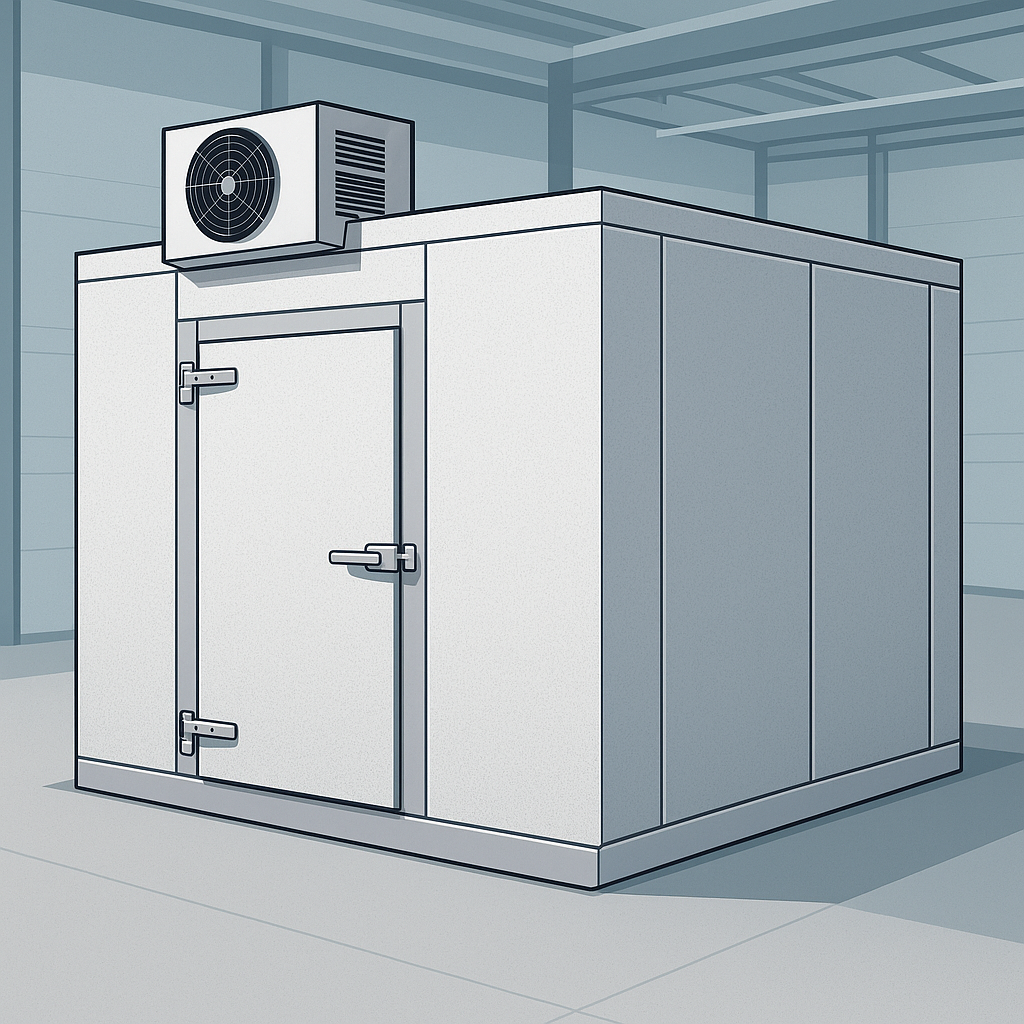
Why commissaries need purpose-built cold storage
A commissary is not a single kitchen. Instead, it is many small businesses sharing one building, one loading area and usually one set of walk-ins. That creates demands a typical single-user box was never designed for:
- Heavy door traffic. Several tenants loading and pulling product at the same time means frequent door openings and more heat load.
- Separated storage. Tenants often need their own shelving, cages or lockable sections so product stays organized and secure.
- Mixed temperatures. Fresh produce, prepared foods, dairy and frozen goods all need different conditions.
- Early and late shifts. Food trucks and caterers load out before dawn and return late, so the boxes rarely rest.
- Growth. A successful commissary adds tenants, and cold storage has to keep up.
Because of these demands, many Centennial and Denver commissary operators find that adding a second used box or squeezing in reach-ins only shifts the problem. A new custom walk-in designed around the way the space is actually used is usually the better long-term answer.
Sizing commissary walk-in coolers for shared tenants
Good sizing starts with how product moves, not just with total square footage. During a site visit, these are the questions worth working through:
- How many tenants share each box today, and how many do you plan to support?
- What is the cooler-to-freezer split? Many commissaries need far more cooler space than freezer space, but frozen demand is growing for meal-prep tenants.
- How will shelving be assigned? Aisle width, shelf depth and tenant cages all affect usable space.
- Where do deliveries arrive? A box near the receiving door cuts down on product sitting out at room temperature.
- Do carts or pallet jacks need to enter? That affects door width, floor type and ramp design.
Combination units are popular for commissaries. For example, a single footprint can hold a large cooler section in front and a freezer section behind it, each with its own refrigeration system and controls. Separate boxes are another option when tenants need fully independent access.
Equipment: Crown Tonka boxes with Heatcraft refrigeration
BBCOND builds new commissary walk-in coolers and freezers with Crown Tonka modular insulated panels. These panels are available for indoor and outdoor coolers, freezers and combination units in custom sizes, so the box can fit an odd corner or a long, narrow room. We pair the boxes with Heatcraft refrigeration systems, including condensing units and evaporators.
One key decision is remote versus self-contained refrigeration:
- Remote systems place the condensing unit outdoors or on the roof, with refrigeration piping to the evaporator inside the box. This keeps heat and noise out of a busy kitchen, which matters when several tenants are cooking at once.
- Self-contained or top-mount systems package the refrigeration on the box itself. They can simplify installation, but they reject heat into the room.
In a crowded commissary, remote systems are often the better fit. However, building layout, roof access and electrical service all play a part in the final choice.

Planning the build in Centennial and Denver
A new walk-in is a construction project with several moving parts. A typical sequence looks like this:
- Site survey. Measure the space, check floor condition, ceiling height, door routes and roof or pad locations for condensing units.
- Floor and slab. Freezers usually need an insulated floor, and the existing slab may need work to accept one.
- Electrical. Confirm panel capacity and plan new circuits early with the electrician.
- Panels and doors. The box is assembled on site, with doors placed for tenant traffic flow.
- Refrigeration piping and equipment. Condensing units, evaporators and line sets are installed and tied in.
- Start-up and inspection. The system is started, pulled down to temperature and checked before product goes in.
Building, mechanical, electrical and health department requirements differ between the City of Centennial, the City and County of Denver and other local jurisdictions. Also, food-handling rules for shared kitchens can vary. Confirm current requirements for your specific property and license type before construction begins.
Energy-efficient features worth building in
Shared kitchens run their boxes hard, so efficiency features pay off every day. On a new build, consider:
- LED interior lighting that adds little heat to the box
- Quality door gaskets, self-closing hinges and strip curtains for heavy traffic
- EC fan motors on evaporators and condensers
- Electronic controls with temperature monitoring and alarms, so every tenant has confidence in the box
Walk-in coolers and freezers are also covered by federal energy conservation standards. The U.S. Department of Energy explains these on its walk-in coolers and walk-in freezers standards page. In addition, refrigerant rules continue to change, so new equipment should be selected to meet current requirements.
Why a new-build specialist fits commissary projects
Many Colorado refrigeration companies focus on repair calls. BBCOND focuses on new construction. Since 2015, we have designed, supplied and installed new walk-in cooler and freezer boxes, outdoor permanent walk-ins and large refrigeration infrastructure replacements for supermarkets and big-box retail. We do not offer repair or service work. Instead, our team is organized around planned projects with a clear scope, schedule and finish.
For commissary walk-in coolers, that means one team handles the layout, box design, refrigeration selection and start-up. Learn more about our commercial refrigeration services in Colorado, or see a related project type in our guide to custom walk-in freezers for food processors in Aurora. After installation, the owner or their chosen service provider handles routine care such as cleaning coils and checking door gaskets.
Frequently asked questions
Should we replace our old walk-in or add a second box?
If the existing box has damaged panels, worn floors, failing doors or aging refrigeration, a single new box sized for current and future tenants is often the more predictable choice. A site visit helps compare both options.
Can tenants have separate, lockable storage inside one walk-in?
Yes. Many commissaries use cages or assigned shelving zones inside a larger box. The layout should be planned with the box so aisles, doors and airflow still work well.
Can a commissary walk-in be installed outdoors?
Yes. Outdoor permanent walk-ins are a good option when indoor space is full. They need a proper pad, a roof designed for snow load and finishes that stand up to Colorado hail and temperature swings.
How long does a new walk-in project take?
Timing depends on design, permits, equipment lead times and site work. Starting early gives the project room to move smoothly, especially if you plan to add tenants on a set date.
Plan new cold storage for your commissary
If your Centennial or Denver commissary has outgrown its cold storage, BBCOND can help you plan new commissary walk-in coolers and freezers built around your tenants. Call 303-219-1000, email sales@bbcond.com, or request a free on-site consultation and estimate.