
Cold Storage Warehouse Refrigeration in Commerce City, CO
Cold storage warehouse refrigeration in Commerce City has to handle more than a single walk-in ever will. Distributors, 3PL operators and food wholesalers along the I-76 and I-270 corridors need cold rooms that hold steady through dock traffic, forklift doors and Colorado weather swings. This guide walks through how a new-build cold storage project comes together, from site survey to start-up.
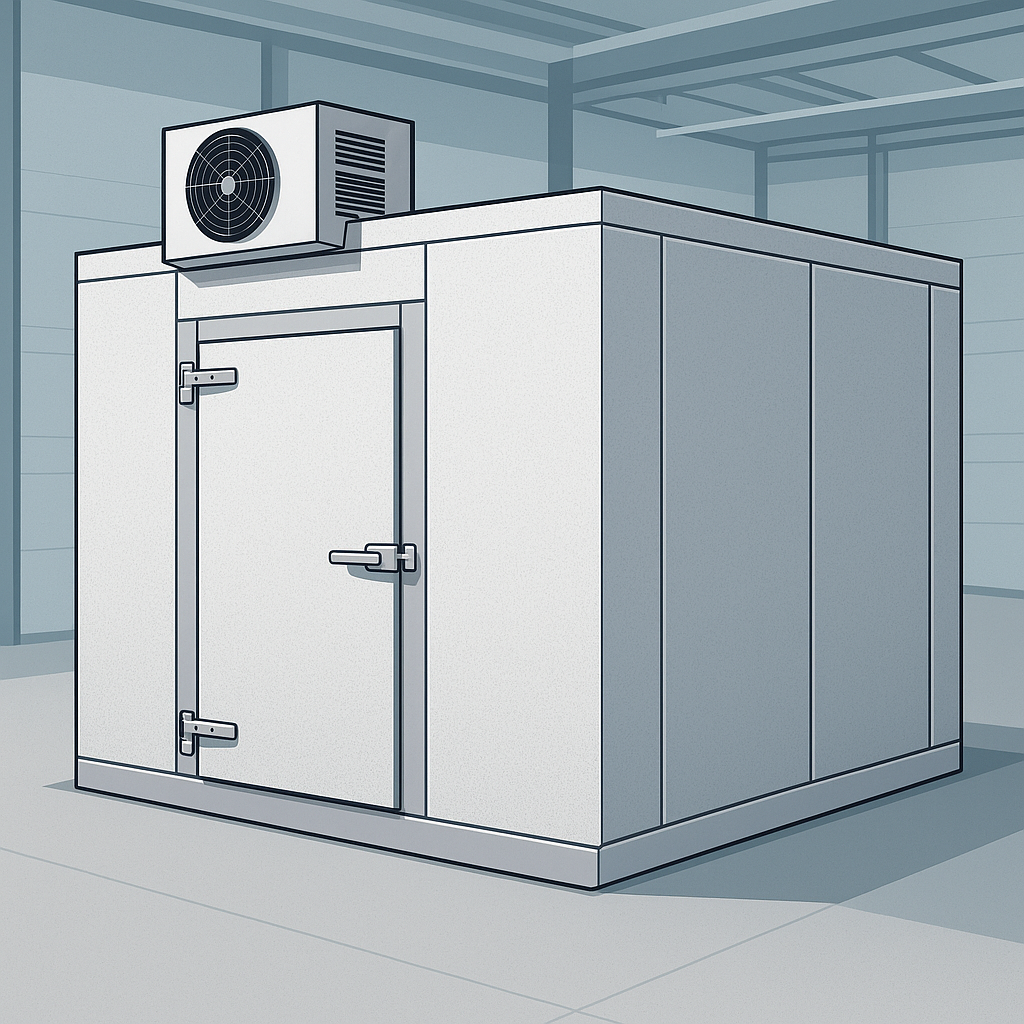
Why Commerce City warehouses need purpose-built cold rooms
Commerce City sits close to rail, interstates and Denver International Airport. As a result, it draws distribution and wholesale businesses that move chilled and frozen product every day. Many of those buildings were designed as dry warehouses. Therefore, cold storage usually has to be added as insulated rooms inside an existing shell.
That is where custom sizing matters. A box built to fit the racking plan, the dock layout and the product mix will perform better than a standard room squeezed into a corner. For example, a produce distributor may need a large cooler near the docks and a smaller freezer for specialty items. Meanwhile, a meal-kit operation may need a combination unit with a shared wall.
Colorado conditions add their own challenges. Summer afternoons on the plains can be hot, while winter nights drop well below freezing. Also, the Denver area sits at high altitude, which affects air density and how outdoor condensing units are selected. A good design accounts for these swings so rooms hold temperature all year.
Product type matters too. Fresh produce, dairy, frozen foods, flowers and beverages each need different temperatures and humidity. As a result, many warehouses split cold storage into several rooms instead of one large box.
Planning cold storage warehouse refrigeration from the ground up
A new-build project goes smoothly when the major decisions are made early. In our experience, these steps shape the whole job:
- Site survey. We measure clear heights, column spacing, dock positions and the path for refrigeration lines.
- Floor and slab. Coolers can often sit on an existing slab. However, freezers usually need an insulated floor, and larger freezers may need underfloor protection against frost heave.
- Electrical. Condensing units, evaporator fans, defrost heaters, lighting and door heaters all need dedicated circuits.
- Panels and doors. Panel thickness, door size and door type depend on temperature and traffic.
- Refrigeration piping. Line routing, sizing and support affect efficiency for years.
- Start-up and inspection. The system is charged, tested and adjusted, then inspected under local requirements.
Because Commerce City and unincorporated Adams County may have different permit paths, confirm which jurisdiction covers your address early.
Choosing boxes and systems for high-traffic cold storage
For most warehouse cold rooms, BBCOND pairs Crown Tonka walk-in boxes with Heatcraft refrigeration systems. Crown Tonka builds modular insulated panels for coolers, freezers and combination units in custom sizes, indoors or outdoors. Heatcraft supplies the condensing units and evaporators that keep those rooms at temperature.
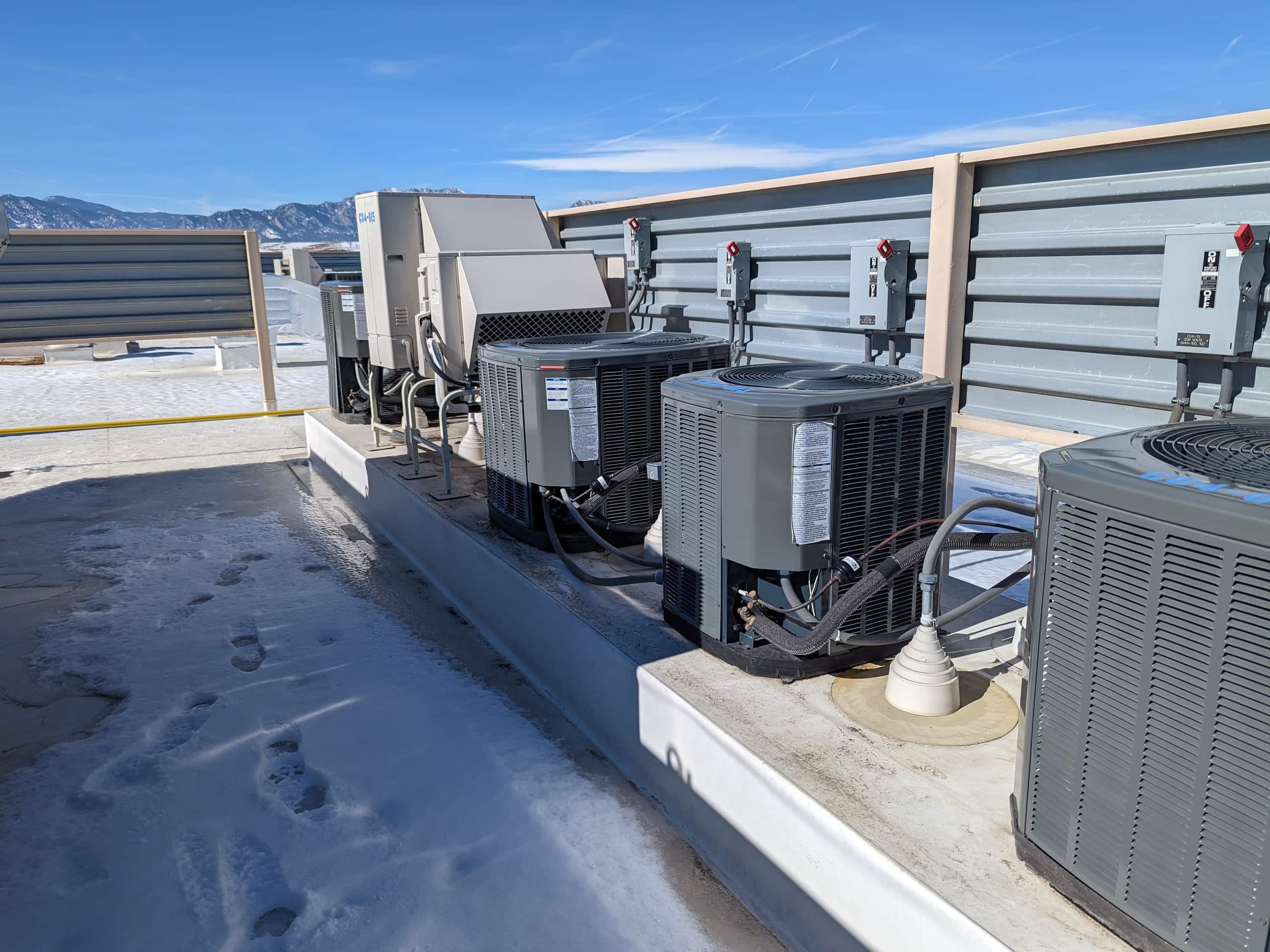
The next choice is remote versus self-contained refrigeration. A remote system places the condensing unit outside or on the roof, which keeps heat and noise out of the warehouse. On the other hand, a self-contained or top-mount system is simpler to install and can suit smaller rooms. For larger warehouse rooms, remote systems are usually the better fit.
Doors, docks and air infiltration
In a warehouse, the door is often the biggest load on the system. Every forklift trip lets warm, moist air in. Also, that moisture turns into frost on evaporator coils. Wider doors, strip curtains, air curtains or vestibules can reduce infiltration. In addition, placing evaporators away from door openings helps the system recover faster.
Energy-efficient features worth specifying
- LED lighting rated for cold rooms
- Tight door gaskets and self-closing hardware
- Strip curtains at high-traffic openings
- EC evaporator fan motors
- Smart controls and remote temperature monitoring with alerts
New walk-in equipment is also subject to federal efficiency rules. The U.S. Department of Energy walk-in cooler and freezer standards page explains the program. Refrigerant rules are changing too, so confirm current requirements for your equipment and location before you finalize a design.
BBCOND builds new cold storage, not repair calls
Many refrigeration companies in Colorado are set up around service and repair. BBCOND is different. Since 2015, we have focused on designing, supplying and installing new equipment and replacing aging infrastructure. That includes custom walk-in boxes, outdoor permanent walk-ins and large refrigeration line and rack replacements.
For warehouse owners, that focus means one team plans the layout, sizes the system, coordinates panels and piping, and manages start-up. If you already have an old cold room that struggles to hold temperature, our answer is a new box or a full infrastructure replacement rather than another patch. You can learn more about our commercial refrigeration services in Colorado.
We also build cold rooms for related businesses. For example, see our guide to custom freezers for food processors in Aurora.
Timelines and keeping operations moving
Lead times for panels and refrigeration equipment vary by size, options and season. Consequently, it helps to start planning well before your lease date or peak season. A typical project moves through these phases:
- Consultation, site survey and layout
- Equipment selection and submittals
- Permits and any slab or electrical prep
- Panel installation and refrigeration piping
- Start-up, testing and inspection
If your warehouse is already running, we can phase the work. Therefore, new rooms can be built while existing storage stays in use, and the cutover can be scheduled for a slower window.
Frequently asked questions
Can a cold room be built inside an existing dry warehouse?
Yes, in most cases. Modular insulated panels are designed for that. The site survey confirms clear height, floor conditions, electrical capacity and a route for refrigeration lines to the outdoor equipment.
Do warehouse freezers need special floors?
Usually, yes. Freezers typically need an insulated floor. Larger or long-running freezers may also need protection below the slab so the ground does not freeze. We review this during design.
Should we replace an old cold room or keep fixing it?
If panels are damaged, doors will not seal or the system runs constantly, a new box often makes more sense. New cold storage warehouse refrigeration can also be sized for how your business works today.
Do you serve areas outside Commerce City?
Yes. We build across the Denver metro and Front Range, including Brighton, Thornton, Aurora, Denver and Greeley.
Plan your new cold storage project
Ready to add or replace cold storage warehouse refrigeration in Commerce City? Call BBCOND at 303-219-1000 or contact us online to schedule a free on-site consultation and estimate.