
Big-Box Store Refrigeration Upgrades in Aurora, Colorado
Big-box store refrigeration in Aurora often runs on racks, piping and evaporators that were installed when the store first opened. Many of those systems now leak more, use older refrigerants and cost more to run every month. However, a full replacement does not have to mean closing the store. With careful planning, new infrastructure can go in section by section while customers keep shopping.
Signs your store has outgrown its refrigeration
Large retail stores in Aurora face long, hot summer afternoons, dry air and big temperature swings between seasons. Over the years, that puts real strain on older equipment. Facilities teams usually notice a pattern before they notice a single failure.
- Rising refrigerant use. Frequent top-offs often point to aging piping, joints and coils across the whole system.
- Uneven case temperatures. Some lineups run warm while others ice up, which can mean the piping layout no longer matches the floor plan.
- Higher energy bills. Older compressors, fan motors and controls draw more power than modern equipment.
- Remodel conflicts. New departments or case layouts may not fit the original line sets and rack capacity.
- Refrigerant questions. Systems built around older refrigerants may be harder to support as rules and supply change.
When several of these show up together, patching one part at a time rarely solves the bigger problem. As a result, many owners start looking at a planned infrastructure replacement instead.
Energy-efficient big-box store refrigeration features
A replacement project is the best time to build efficiency into the store. Because the piping, racks and evaporators are already being replaced, upgrades cost less to add now than later. Common features to discuss during design include:
- EC fan motors on evaporators and condensers, which typically use less power than older motor types.
- Electronic controls and monitoring that track temperatures, alarms and defrost across every circuit.
- LED lighting in cases and walk-ins, which adds less heat to the refrigerated space.
- Right-sized piping designed for the current case layout instead of the original one.
- Quality gaskets, doors and strip curtains on back-of-house walk-in coolers and freezers.
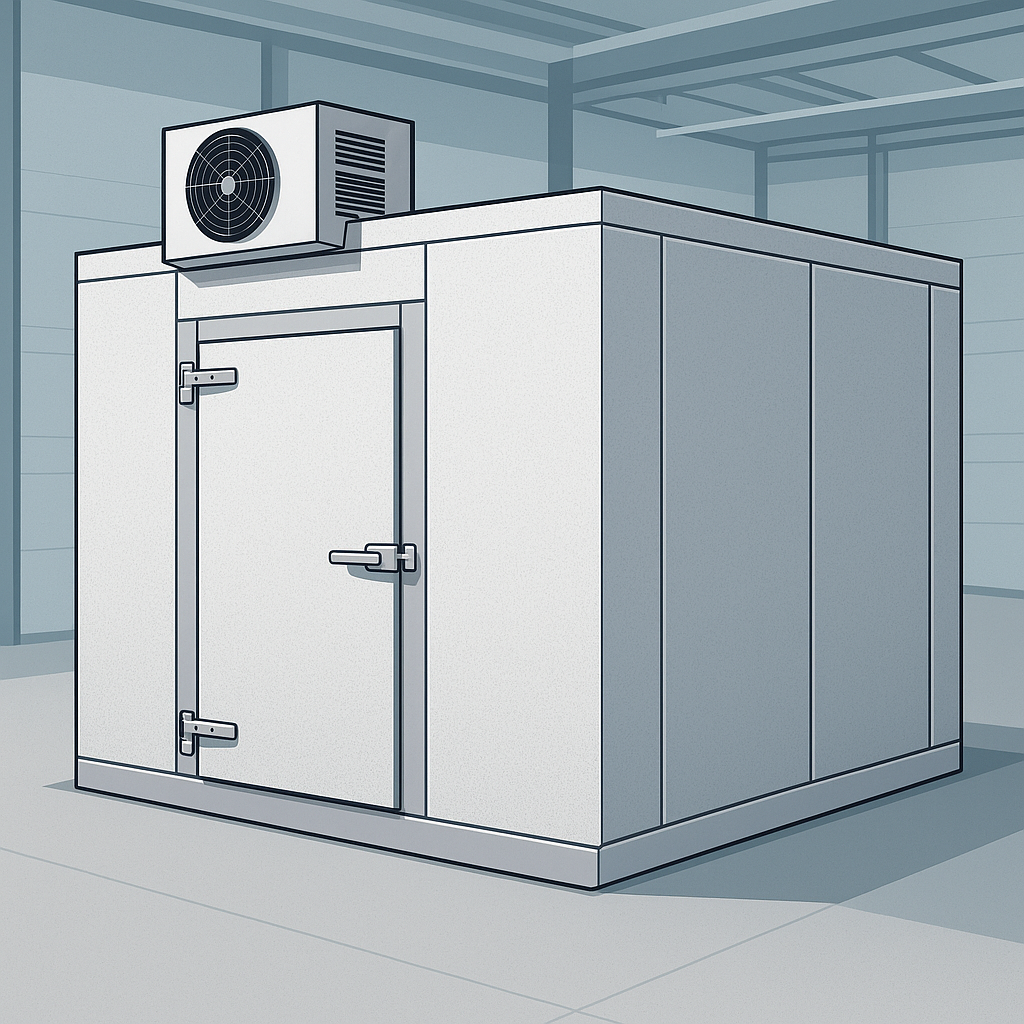
Also, new walk-in boxes in the stockroom can be sized for how the store receives product today. For example, a larger combination cooler and freezer may replace several small, worn boxes. BBCOND builds these with Crown Tonka modular insulated panels and Heatcraft condensing units and evaporators.
Refrigerant changes and new equipment
Federal refrigerant rules for retail food systems have changed several times in recent years. Therefore, the refrigerant choice for new racks and condensing units should be settled early in design. It affects equipment selection, piping, controls and long-term support.
The EPA lists current restrictions for supermarket systems and remote condensing units on its Technology Transitions HFC restrictions by sector page. Rules and dates can change, so confirm the current requirements that apply to your store before ordering equipment. Local building and mechanical codes in Aurora and Arapahoe or Adams County also apply.

Phasing the work while the store stays open
Big retail stores cannot afford to empty every case at once. Instead, the replacement is broken into phases that match how the store operates.
- Survey and design. Map existing racks, line sets, cases and walk-ins, then plan new routes and capacities.
- Phase planning. Group work by department or circuit so only one area is affected at a time.
- After-hours scheduling. Cutovers and case reconnections happen overnight or during slow periods.
- Product protection. Coordinate with store teams on moving product and temporary holding.
- Start-up and testing. Each phase is pulled down to temperature and checked before product returns.
Good coordination with the facilities team keeps surprises to a minimum. In addition, clear daily communication helps store managers plan staffing and deliveries around the work. You can see a similar approach in our post on supermarket refrigeration rack replacement in Thornton.
Why BBCOND focuses on new builds and replacements
Many Colorado refrigeration companies focus on repair calls. BBCOND takes a different path. Since 2015, we have focused on designing, supplying and installing new refrigeration equipment and replacing aging infrastructure. We do not offer repair or service work.
That focus matters for big-box store refrigeration because these are construction projects, not service calls. They need engineering, scheduling, piping crews and close coordination with store operations. One team carries the project from survey to start-up. Learn more about our commercial refrigeration services in Colorado, including new walk-in coolers, outdoor walk-ins and full infrastructure replacements.
After the project, the store or its chosen service provider handles routine care, such as coil cleaning, gasket checks and alarm reviews.
Frequently asked questions
Can we replace refrigeration without closing the store?
In most cases, yes. Work is phased by department or circuit, and cutovers are scheduled after hours. As a result, most of the store stays open and stocked throughout the project.
Should we replace piping, racks or both?
It depends on the age and condition of each part and on your refrigerant plan. A site survey shows whether the existing line sets can support new equipment or whether a full replacement is the better long-term choice.
Can stockroom walk-ins be replaced at the same time?
Yes. Replacing worn walk-in coolers and freezers during the same project often makes sense. New boxes can be sized for current deliveries and connected to the new refrigeration system.
How long does a replacement project take?
Timing depends on store size, number of phases, permits and equipment lead times. Because refrigeration equipment can take time to arrive, starting design early helps protect your schedule.
Plan your Aurora store refrigeration replacement
If your big-box store refrigeration in Aurora, Denver or anywhere on the Front Range is showing its age, BBCOND can help you plan a phased replacement. Call 303-219-1000, email sales@bbcond.com, or request a free on-site consultation and estimate.